
play_arrow
Listeners:
Top listeners:
00:00
00:00
volume_up
chevron_left
-
 play_arrow
123 | A Science Paradox: Would Francis Bacon Have Survived Greenpeace and Exxon?
-
 play_arrow
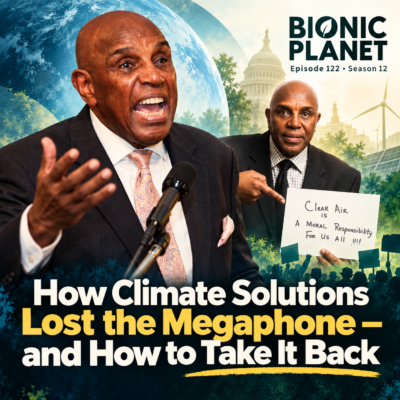
122 | How Climate Solutions Lost the Megaphone — and How to Take It Back, with Reverend Dr. Gerald Durley
-
 play_arrow
121 | Michael Greene: Carbon Cowboy or Lone Ranger Part 2 – The $200 Million Land Heist in the Amazon
-
 play_arrow
120 | Indonesia is Still Moving its Capitol, and Nobody Cares?
-
 play_arrow
118 | Kenyan Herders Say Judgement Against Them Based on Forged Signatures / Continuation of Episode 117
-
 play_arrow
117 | Surviving Survival Internatinal, Part 1: Kenyan Elders Call Foul on International Media, NGOs
-
 play_arrow
116 | From Ticking Time Bomb to Demographic Dividend: James Mwangi and Kenya's Great Carbon Valley
-
 play_arrow
115 | Unpacking Donald Trump's Very Weird Environmental Orders
-
 play_arrow
114 | Michael Greene: Carbon Cowboy or Lone Ranger? Part 1
-
 play_arrow
113 | The Future of Environmental Finance: Strategies for Biodiversity and Climate Solutions, with David Hill and George Kelly
119 | Blue Carbon Pioneer James Kairo on How Mangroves Combat Climate Change: First of Three Parts
Transcript arrow_drop_down

Transcript
Today’s guest, Blue Carbon Pioneer James Kairo, brings us into the fascinating world of mangroves and their immense economic and ecological value. Our journey begins with a brief overview of mangroves, which, despite covering only 0.01% of the sea surface and just 1% of Kenya’s land area, play a crucial role in carbon sequestration and coastal protection.
I had the privilege of recording this episode on location at the world’s first blue carbon project, Makoko Pomoja in Gazi Bay, Kenya. This project not only aims to restore degraded coastal areas but also emphasizes the importance of education and community engagement in conservation efforts.
Throughout our conversation, Dr. Kairo highlights the multifaceted benefits of mangroves, including their role in shoreline protection, habitat provision for marine life, and their capacity to capture and store carbon dioxide. He explains how mangroves can sequester carbon at rates significantly higher than terrestrial forests due to their unique growing conditions in anoxic environments.
We also discuss the challenges faced by mangrove ecosystems, particularly the pressures of climate change, over-exploitation for wood, and the impacts of shrimp aquaculture. Dr. Kairo emphasizes the need for innovative solutions that allow communities to benefit from mangroves without degrading them. This includes alternative livelihoods such as ecotourism and sustainable fishing practices.
As we explore the concept of blue carbon, we touch on the importance of scientific research and data collection in demonstrating the value of mangroves. Dr. Kairo shares insights into the methodologies used to measure carbon sequestration and the significance of community involvement in carbon trading initiatives.
In addition to Dr. Kairo, we are joined by Basco Juma, a Kenyan social entrepreneur and founder of the NGO Big Ship, who shares his experiences in promoting sustainable practices and community engagement in mangrove conservation. Together, they illustrate the collaborative efforts required to protect these vital ecosystems and the potential for scaling similar projects in other regions.
As we wrap up the episode, we reflect on the broader implications of blue carbon initiatives for climate change mitigation and the importance of integrating local knowledge and community needs into conservation strategies. This episode serves as a powerful reminder of the critical role that mangroves play in our environment and the urgent need to protect them for future generations.
Join us as we embark on this enlightening exploration of mangroves, blue carbon, and the innovative solutions being implemented to safeguard our planet’s coastal ecosystems.
Episodes
play_arrow

play_arrow
play_arrow
play_arrow